

Greetings from the leading edge of fall semester. I have already taught one class last week, a lesson in our program’s introductory seminar, and am getting ready to launch my technology and innovation class this Thursday. Also, the AI and higher ed seminar will go live in a week; I hope to share the plan for that fundamentally redesigned class here.
But first, let’s check in on rising opposition to AI in the United States. I’ve written about this previously (for example) and that sentiment continues to build. This may have powerful effects on the development and acculturation of AI.
So for today’s post I’ll look into one news story and a series of opinion polls, then close by reflecting on what they might be telling us.
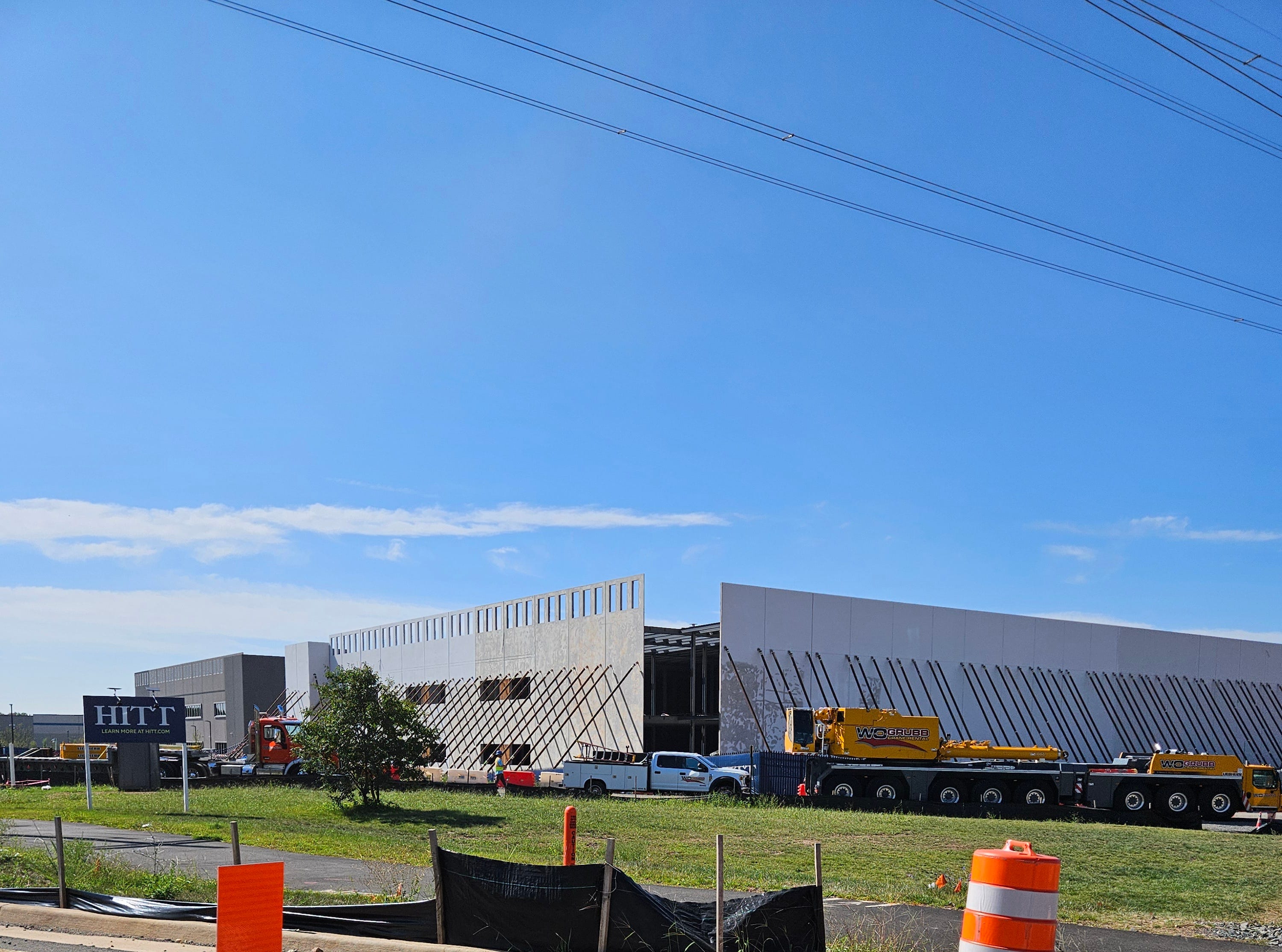
Let’s begin with a New York Times analysis of how midterm election campaigns are increasingly targeting data centers. I was struck by a few details. First, politicians are lagging public opinion on this topic - “‘It’s very much a bottom up, organic movement,’ said Anna Greenberg, a veteran Democratic pollster.” I heard something similar from my state representative this summer in a meeting, that she found more and more residents hopping mad about data centers. They informed her, not the other way around.
Second, for several years opposition to AI has come from progressive critics and politicians. Here’s a sample from today, a Democrat running for Congress in Michigan:
(Note the inter-state rhetoric.) Now it looks like some Republicans are now carving out their own anti-data-center stance.
Some Republicans are now using “data center” as an epithet, and casting themselves as the real opponents of corporate tax breaks and unfettered construction. Last week, Mike Rogers, the Republican running for Senate in the key swing state of Michigan, said that he supports a one-year moratorium on data center construction.
“Data center” as epithet! Let’s see if we get more insults like this, Fred “data center” Smith or Susan “AI” Wong.
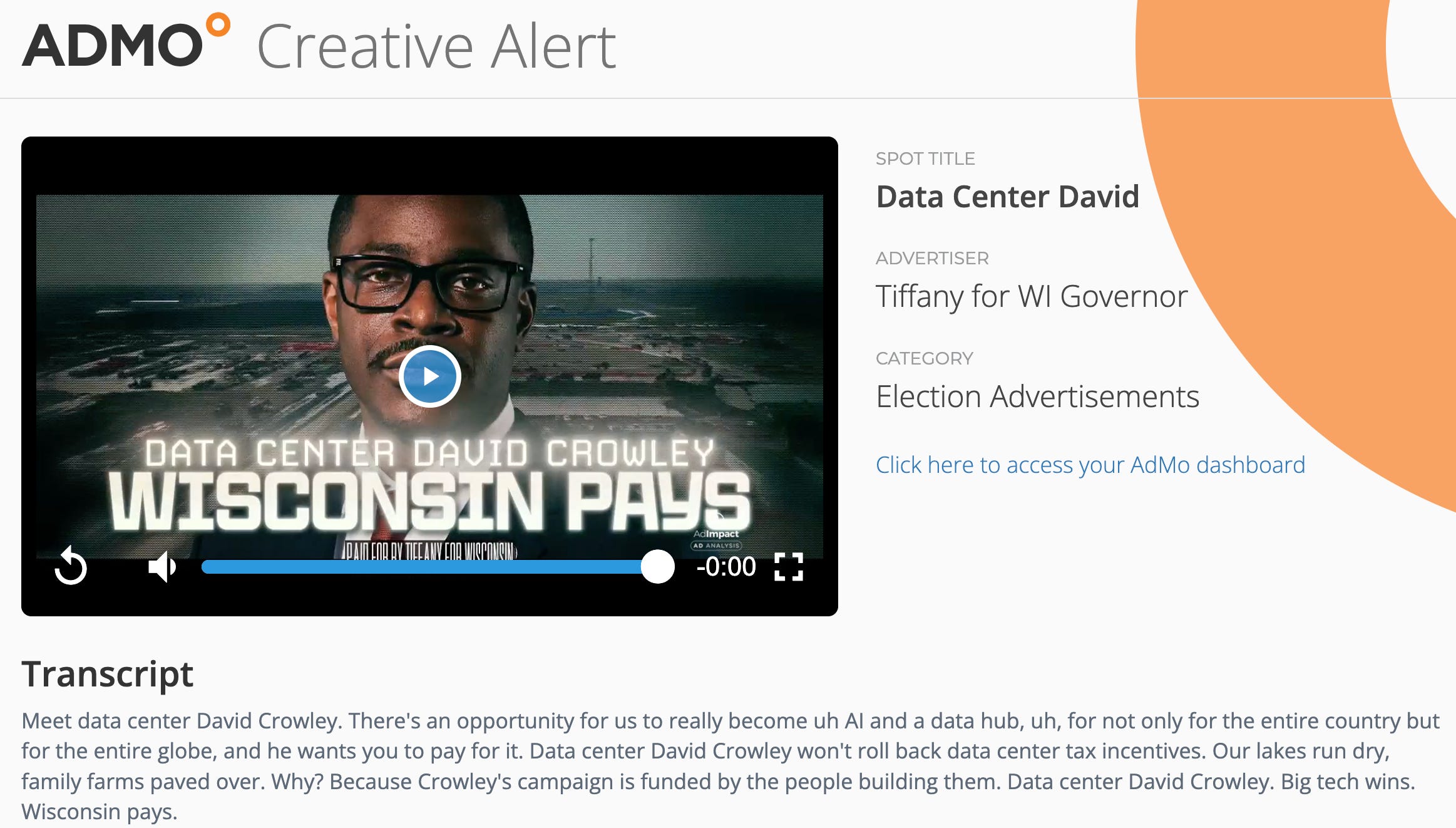
Here’s more on that GOP ad aimed at a Democrat running for Wisconsin governor:
The governor of Texas, a fiercely Trumpian conservative, has pivoted firmly against data centers, ordering them to comply with his newer regulations: “I established clear guardrails to ensure data centers protect our electric grid, conserve our water, respect our neighborhoods, and pay their own way… They must not pass costs on to Texas families or interfere with their quality of life.”
Opposition to AI, or at least data centers folks associate with that tech, might be something candidates of both parties compete to own:
[Democratic governor of Pennsylvania] Shapiro has started airing a television ad attacking his Republican challenger, Stacy Garrity, as the “number one fan of data centers.” Ms. Garrity has her own ad hitting Mr. Shapiro for “data centers in our backyards,” but her campaign can afford only a small fraction of the airtime.
Polls demonstrate these rising attitudes in some interesting ways. A Heatmap survey found a rapidly growing population opposed to data centers appearing near them:

That’s now 75% against, a solid three fourths of Americans. In contrast, supporters look like a measly 15% or so.
Heatmap’s polls show support declining across all political stripes. Republicans are the least opposed, but even their attitudes have greatly soured over the past year, reaching a net negative:

In an email, Heatmap’s Robinson Meyer wrote that opposition to AI may have reached a "tipping point. (The same Heatmap article points to this, ah, creative way to protest data centers.)
Similarly, and from a very different political position, a Fox News poll found opposition to data centers appearing in a few different ways. First, there’s a clear divide with similar numbers to Heatmap’s:
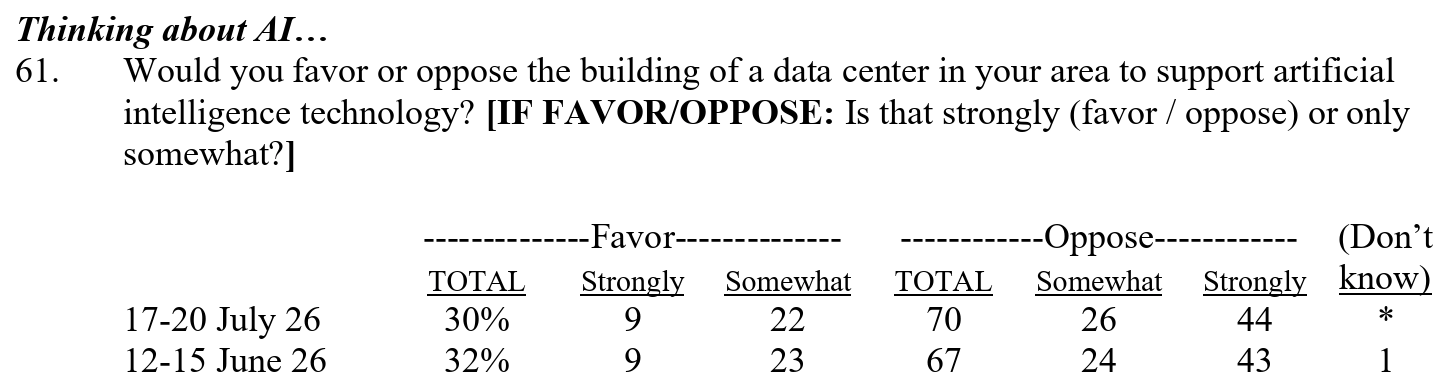
70% against, 30% for, with a few points sliding over a one month period.
Second, Fox found some very interesting rationales. Asking respondents why they opposed data centers, economic and environmental reasons led:
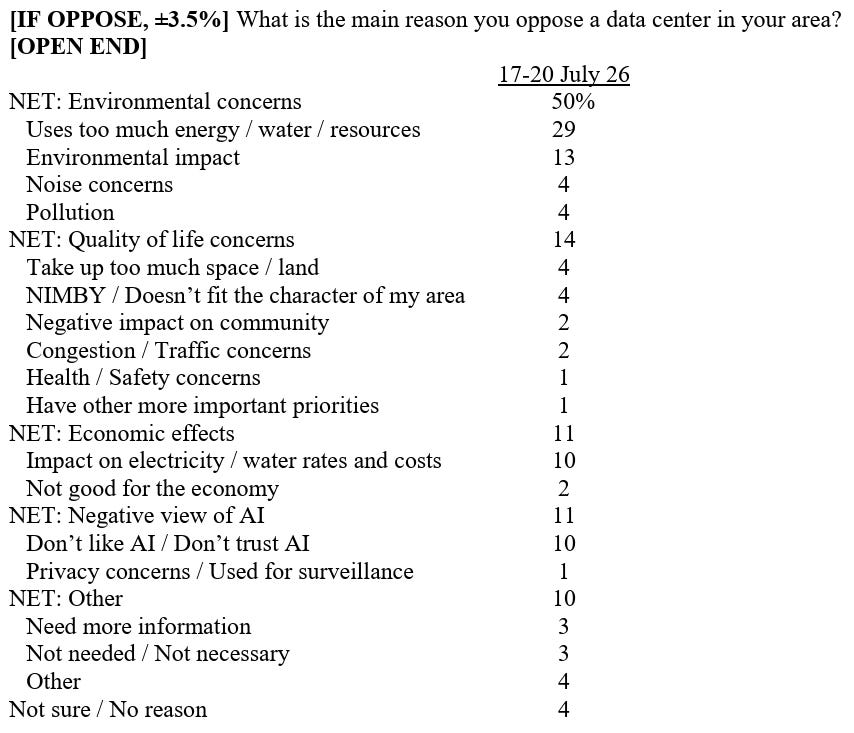
Energy and water lead the pack. Dislike of AI is far, far below those.
Interestingly, Fox also asked AI supporters why they wanted more data centers nearby. Very intriguing answers appeared:
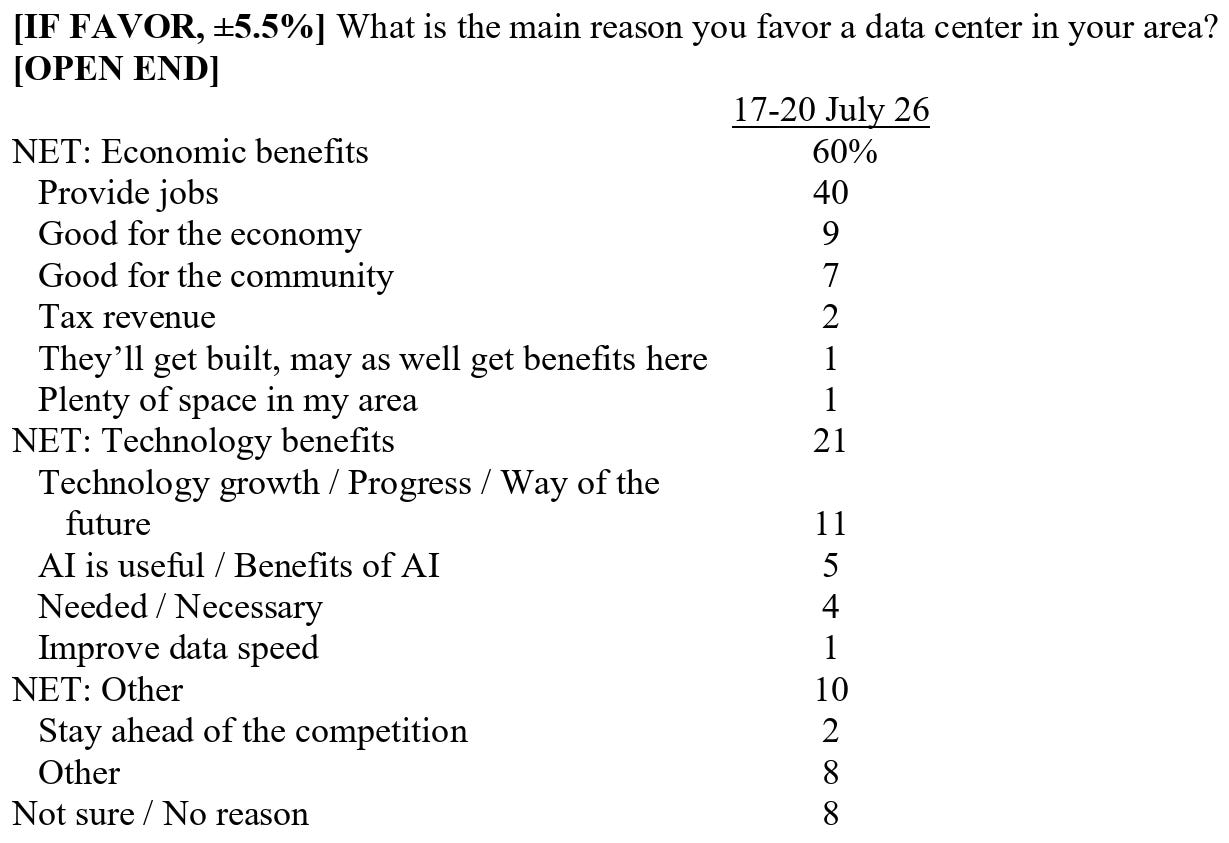
Economics dominate here, and jobs lead the way under that header, clearly, followed distantly by technology per se. Progress and the future only register 11%. (From AI-boosting president Trump this week: “[C]ommunities that don’t take a data center, they’re making a mistake because there’s plenty of communities that want them… Because it means jobs, and it means tremendous tax revenue coming into the towns and cities that take them.”)
An Annenberg study found similar results to Fox and Heatmap. In their survey 61% of Americans “somewhat or strongly oppose the construction of new data centers in their area.” That number has recently risen, “up from 49% in the survey ending in March.” Like the Fox survey, anti-data center animus cut across party lines: “Majorities of Democrats (69%), Republicans (54%) and independents (53%) oppose new local data centers.”
Nicely, Annenberg sliced their results by demographics - specifically by age: “Opposition is highest among young adults under 30 (70%) and declines to 57% among those 65 and older.”
I was also fascinated by this breakdown of where Americans thought AI might have impacts. Check the only positive one:

We’ll keep an eye on that health care dimension. Note how far it breaks from the others.
Meanwhile, a new Pew Research study found people’s dislike of AI to be rising, especially among younger Americans:

What might we make of these reports, this rising trend of American opposition to data centers and AI, looking forward?
Opposition to data centers is at least partly a demotic movement, a bottom up drive. Politicians are reacting to it, and so we should expect more to jump on board and to try shaping that popular energy. At the same time we should look for more popular expressions of opposition, from protests and locally organized groups to marches, pickets, and even violence.
I’m struck by the Annenberg identification of medical research as something people support very intensely, especially compared with other potential benefits. AI and data center supporters should zero in on this in making arguments. “AI for health care,” “data centers for hospitals” might become slogans. Opponents should bear this in mind and come up with counters.
One dimension of the data center struggle is economic. I note that economic attitudes play a major role on both sides of the data center divide. Proponents look to economic benefits, notably on the jobs side, while opponents see economic costs to jobs (when it comes to AI) and energy/water/resources (for data centers). We can expect economics to continue to be the ground of debate.
There is also an environmental/climate change dimension. Readers are familiar with the charges: data centers have a large electrical power footprint which too often entails drawing on fossil fuel sources; centers also suck down precious fresh water. I am not sure how widely held, or how widely expressed, such sentiments are, given energetic opposition from the current administration and the popular practice of climate hushing. The Fox poll uses the language of “Uses too much energy / water / resources” and that compresses the environmental into the economic. I am alive to the possibility that green opposition to data centers might feed into a resurgent climate movement.
Another, very muted aspect to the struggle is geopolitical. Some in the United States see the AI buildout as part of Cold War 2.0 with China, justifying the pains of having data centers loom over landscapes in terms of that global competition. This view has clearly not won many adherents, if the above polls and emerging electoral politics are good indicators of popular attitudes. Perhaps AI defenders will lean into the geopolitics to defend their infrastructure development. One newsletter offered this take:
The alternative [to a major data center buildout] would be to lose even more wars, and lose badly, as well as to become some type of hermit kingdom, as competing internationally against other AI-pilled economies would become impossible.
Overall, in this debate one side now has a majority and also, almost miraculously, emerging bipartisan support. Where might this solid opposition take us? The Fox poll offers one path. Summing things up, Fox asked respondents what we should do next:
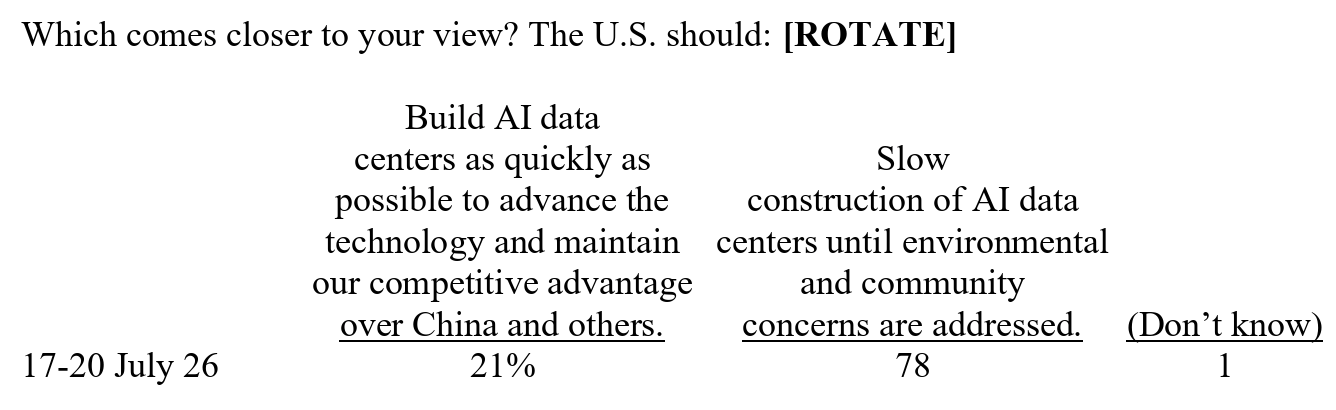
That “slow” sentence might be where we’re headed. We could see enough communities and state governments stall data center rollouts until the total build slows and stalls. It might entail a great pause.
After that, perhaps we would then reach a collective settlement for siting centers with sufficient guidelines - after which the buildout continues. Given American history and politics, I can imagine finding locations deep in rural areas and/or adjacent to marginalized populations, in addition to identifying or building out necessary infrastructure.
Could things go further than that? Are Americans angry enough to mobilize so as to not just slow down data center growth, but to turn things around? Do we have the drive to shutter existing centers, reducing the national total? That would be a new phase in the AI opposition story, a turnaround, a reduction, a new level. That could be a sign of Butlerian jihad energies (subject of a forthcoming post).
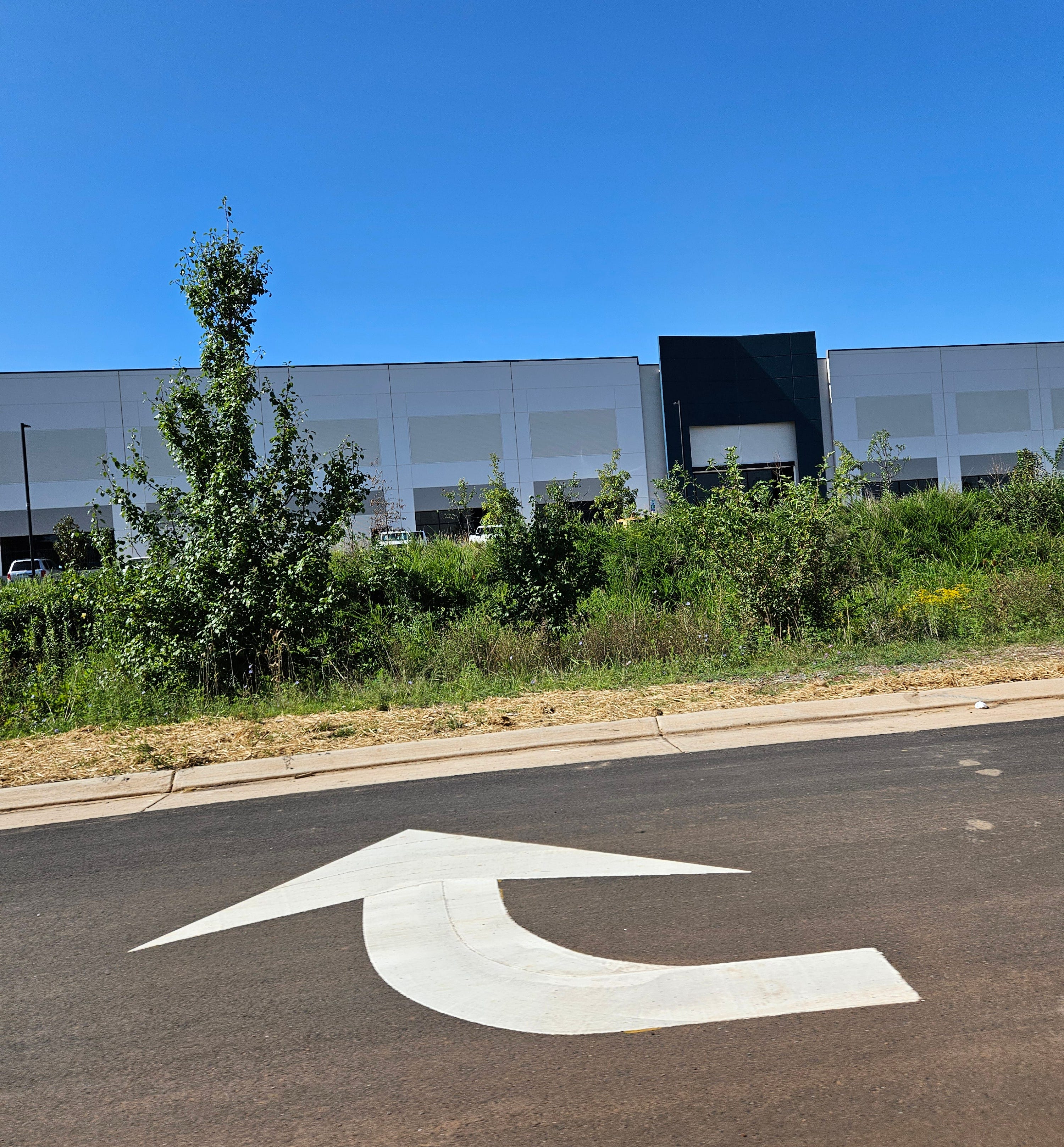
Let me close on a personal note and with a question. I live in northern Virginia, which is data center heaven. There are plenty of the structures near us - I pass more than four on the way to our gym. Our local climate action group is focusing more on opposition to data centers. So this is something mentally and physically close to me.
Over to you. Is there a data center buildout occurring in your area? What are the attitudes you’re hearing?
(one link via the essential Bill McKibben; another via Jesse Walker)
Thanks for doing this scan of recent polling. I’m about to write my own take on data centers, and as a political scientist I’ve been following this closely. One interesting footnote is that we shouldn’t overplay the environmental dimension to data center opposition. Look under the hood of “environmental concerns.” Pollution comes in at a measly 4%! That would be unreal for a true environmental justice issue. What we see instead is a focus on the vague “resources” objection, which could be LULU by another name. The most interesting thing in my view is that both the left and right have come to oppose data centers, but for entirely different reasons. It’s a perfect storm, ideologically speaking. Thanks for the write up!
We have multiple sites targeted in Michigan, and people have been protesting pretty hard. The problem is we have so many different AI companies, and they all want their own data centers, which is absurd because they use a tremendous amount of water and electricity.
The biggest issue that I have is that you have the same people complaining about the environmental ramifications, but then some of those same people don’t recycle or have any problem with things like golf courses and other uses that consume tremendous amounts of water.
And yes, the opposition to AI has been dramatically increasing. It’s actually been pretty shocking how quickly the backlash has grown.